Bone broth is a timeless staple that’s nourishing, economical, and incredibly easy to make at home. Whether you’re sipping it from a mug for gut health, using it as a base for soups and stews, or feeding your family nutrient-dense meals, bone broth is a powerful addition to your kitchen. Unlike store-bought varieties that can be watery, expensive, or packed with preservatives, homemade bone broth is rich in flavor, collagen, and minerals—and it is easy on your wallet.
This post contains affiliate links. I may earn a small commission at no extra cost to you.
What Bones Are Best for Making Bone Broth?
The best bones for making bone broth are the ones rich in collagen, marrow, and connective tissue. This includes:
- Beef bones: knuckle bones, marrow bones, oxtail, neck bones, and shanks. These create a gelatin-rich broth with a deeper flavor.
- Chicken bones: backs, necks, feet, and wings. Chicken feet especially add a lot of gelatin.
- Pork bones: hocks, neck bones, or feet are good options and can result in a sweeter, rich broth.
- Fish bones: heads and spines from non-oily fish like cod or halibut are perfect for lighter broths.
If you’re buying bones specifically for broth, ask your local farmer, butcher, or meat counter if they have soup bones or “pet bones.” They’re often very affordable or even free. Using a combination—like chicken backs with feet or beef knuckles with marrow bones—creates the best balance of collagen, minerals, and flavor.
Is It Cheaper to Make Bone Broth or Buy It?
In almost every case, homemade bone broth is significantly cheaper than store-bought. A quart of good-quality bone broth at the store can cost anywhere from $6 to $12, especially if it’s labeled organic or grass-fed. When you make it at home:
- You can use bones from a roast chicken, leftover steak bones, or bones saved from pork chops or ribs.
- If buying bones, they often cost between $1–$3 per pound from local farms or meat counters.
- You can use veggie scraps like onion peels, garlic skins, and carrot tops that you’d otherwise throw away. Store these in the freezer until you’re ready to make broth.
With just a few dollars’ worth of bones and pantry items, you can make a whole gallon of rich, nourishing broth at home. If you regularly cook with meat, you’re already halfway there.
How to Make Bone Broth Taste Better
While bone broth is naturally rich, there are a few key steps that dramatically enhance its depth and flavor.
1. Roast the bones first
Before simmering, roast your bones in the oven at 350°F for 30–40 minutes. Spread them out in a single layer on a baking sheet or roasting pan. Roasting brings out deep umami flavor and gives your broth a rich, caramelized base. This is especially important for beef or pork bones. You can also used the bones from a whole chicken you have previously roasted (no need to roast it again).
2. Add aromatics and spices
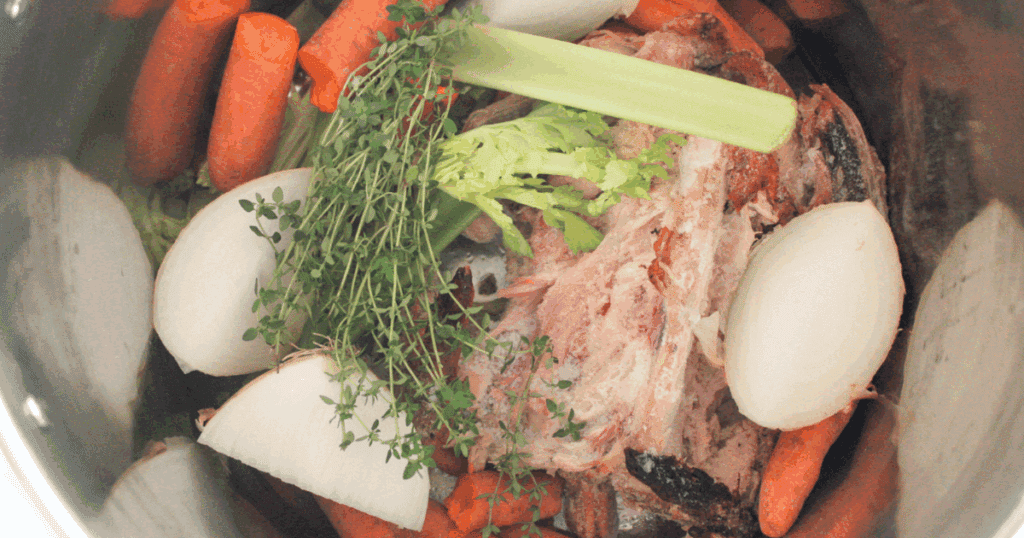
Once your bones are roasted and in the stock pot or slow cooker, add:
- 1–2 onions, halved (no need to peel)
- 2–3 carrots, roughly chopped
- 2–3 celery stalks
- A few garlic cloves (smashed)
- A bay leaf or two
- Peppercorns
- Salt (start light—you can always add more later)
- A teaspoon of paprika for a subtle smoky warmth
These additions infuse your broth with savory flavor. You can also experiment with herbs like thyme or parsley stems if you have them on hand.
3. Simmer gently and low
Bring your large stock pot just to a gentle boil, then reduce to the lowest simmer. You want just a bubble or two rising every few seconds—not a rolling boil. Slow, low cooking is key to drawing out the nutrients without clouding the broth.
Simmer for:
- Chicken broth: 12–24 hours
- Beef or pork broth: 24–48 hours
- Fish broth: 4–6 hours
Once it’s done, strain it through a fine mesh strainer, cool completely, and store in jars or containers.
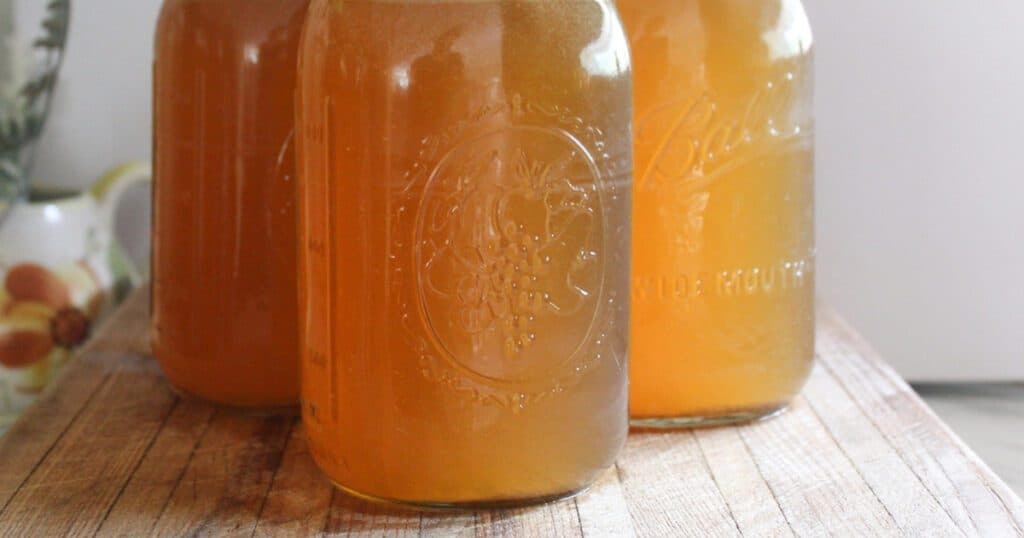
How to Can Bone Broth
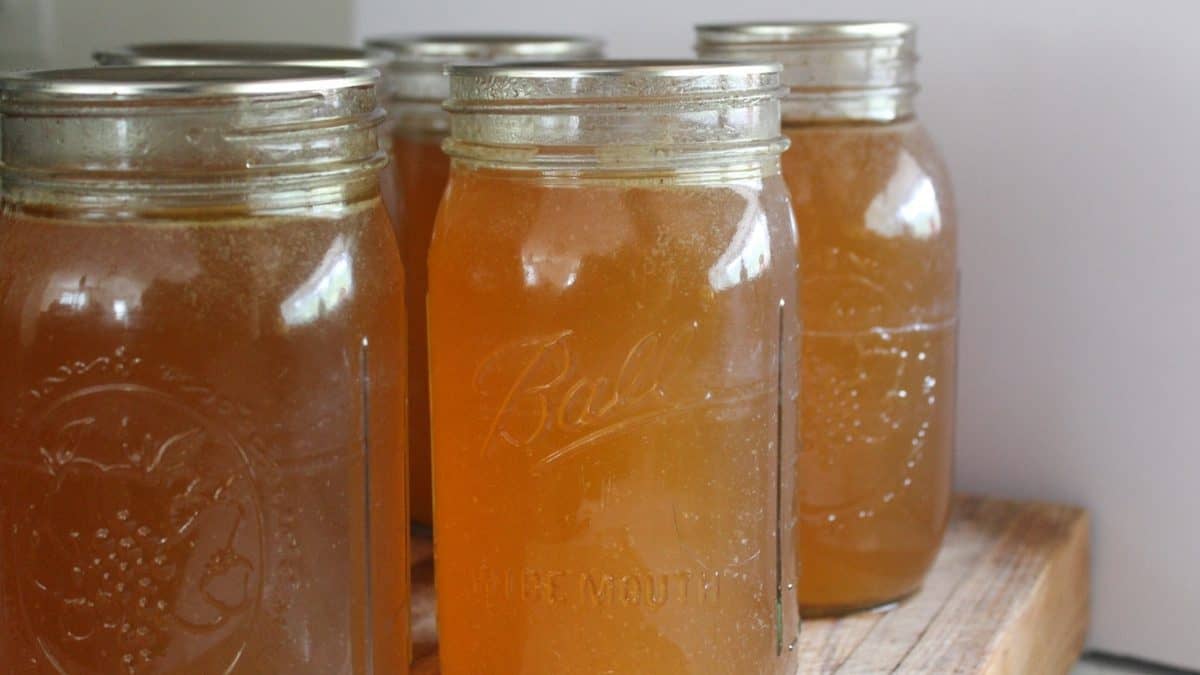
Canning bone broth is an excellent way to preserve your batch for long-term storage without taking up freezer space. Because bone broth is a low-acid food, it must be pressure canned to ensure safety. Water bath canning is not safe for broth.
What You’ll Need
- A pressure canner (not a pressure cooker)
- Clean pint or quart mason jars
- New lids and rings
- Hot, strained bone broth
Instructions
- Prepare your pressure canner according to the manufacturer’s instructions. Add the recommended amount of water to the canner base.
- Heat your bone broth until it reaches a simmer. It should be hot when ladled into jars.
- Wash and warm jars to prevent cracking. You can keep them in hot water or a warm oven until ready to use.
- Ladle the hot broth into jars, leaving 1 inch of headspace.
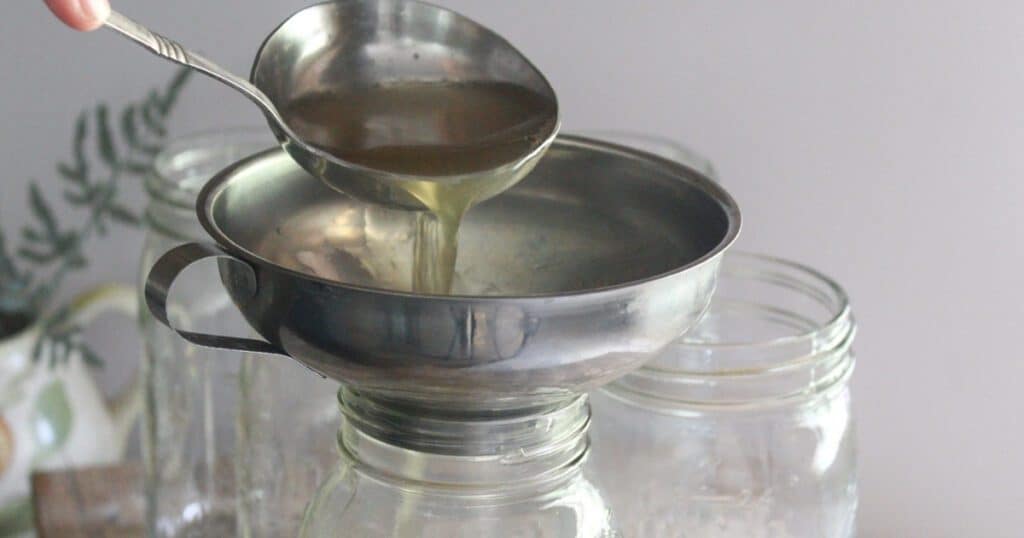
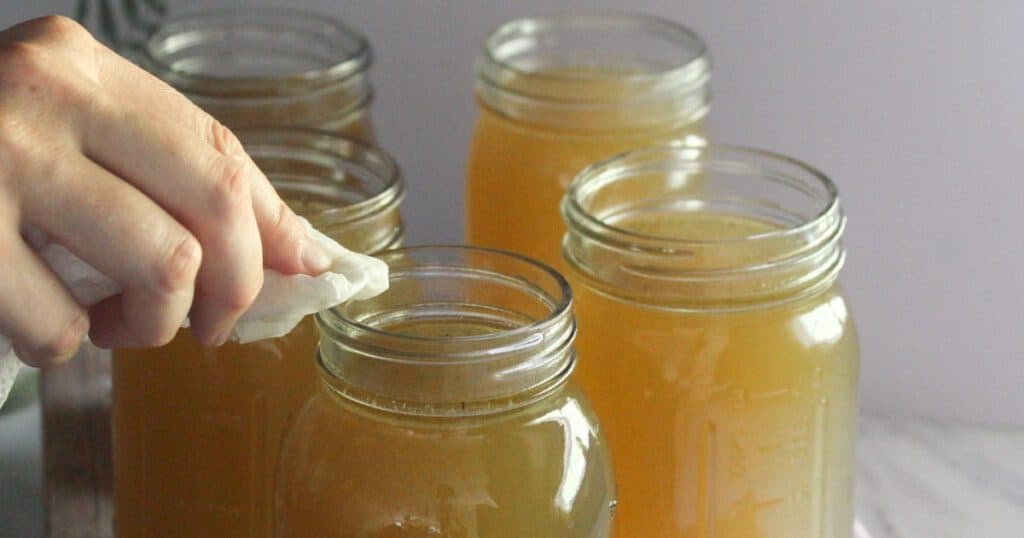
- Wipe rims with vinegar to ensure they are clean before adding on your lids.
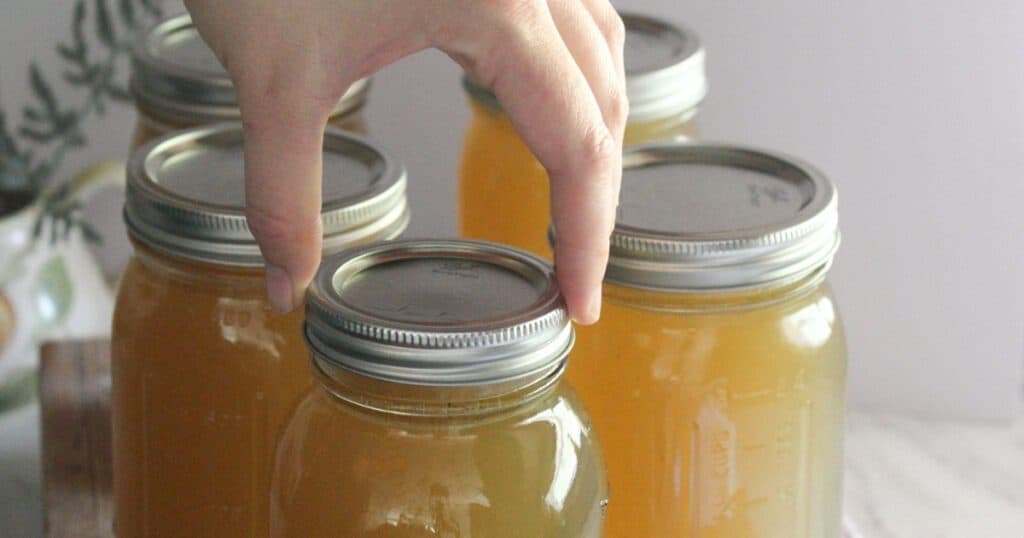
- Place lids and rings on the jars and tighten to fingertip-tight.
- Load the jars into your pressure canner, ensuring they are on the rack and not touching each other or the sides of the canner.

- Seal the canner and vent steam for 10 full minutes. After venting, bring the canner up to pressure:
- 10 PSI for a weighted gauge at sea level
- 11 PSI for a dial gauge
Adjust for your elevation as needed.
- Process time depends on jar size:
- Pints: 20 minutes
- Quarts: 25 minutes
- When time is complete, turn off the heat and allow the canner to depressurize naturally. Do not force it open.
- Once pressure is fully released, remove the lid and let jars sit in the canner for 10 minutes, then transfer them to a towel-lined surface to cool undisturbed for 12–24 hours.
- Check seals after cooling. Any unsealed jars should be refrigerated and used promptly. Properly sealed jars can be stored in a cool, dark place for up to 12–18 months.
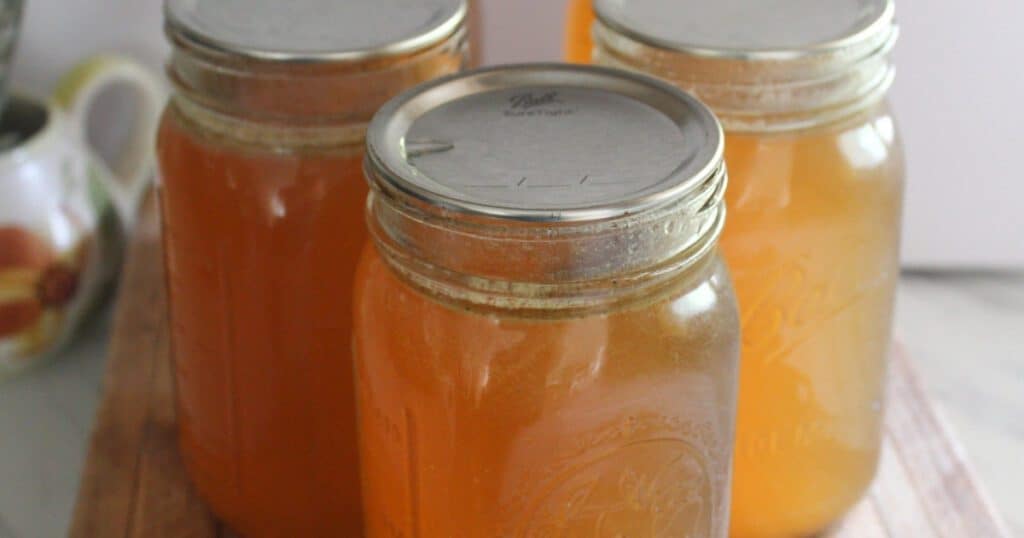
Homemade Bone Broth with Pressure Canning Instructions
Equipment
- 1 Large Pot
- 1 Pressure Canner
Ingredients
- 4 lbs beef chicken, or pork bones (knuckles, backs, necks, feet)
- 2 onions halved (no need to peel)
- 3 celery stalks roughly chopped
- 3 medium carrots roughly chopped
- 3 garlic cloves smashed
- 1 teaspoon salt
- 1 teaspoon paprika
- 1 teaspoon whole peppercorns
- 2 bay leaves
- 1 tablespoon apple cider vinegar
- 12 cups water or enough to cover bones
Instructions
- Preheat oven to 425°F. Spread bones on a baking sheet and roast for 30–40 minutes until browned.
- Transfer roasted bones to a large stockpot or slow cooker. Add onions, celery, carrots, garlic, bay leaves, peppercorns, salt, paprika, and apple cider vinegar.
- Add enough water to cover the bones by about an inch.
- Bring to a gentle simmer, then reduce heat to low. Simmer uncovered for 12–48 hours depending on the bones used (chicken: 12–24 hours, beef/pork: 24–48 hours).
- Strain the broth through a fine mesh strainer or cheesecloth into a large bowl or container. Discard solids.
- Let the broth cool slightly and skim off any fat if desired. Use immediately, store in the fridge for up to 5 days, or proceed to can it.
Pressure Canning Instructions:
- Prepare your pressure canner according to the manufacturer’s directions.
- Heat the strained broth to a simmer. Keep jars hot to avoid thermal shock.
- Ladle hot broth into clean pint or quart jars, leaving 1 inch of headspace. Wipe the rims clean and apply lids and rings, fingertip-tight.
- Place jars in the pressure canner on a rack. Seal the lid and vent steam for 10 minutes.
- Bring to 10 PSI (weighted gauge) or 11 PSI (dial gauge). Adjust for altitude if needed.
- Process pints for 20 minutes, quarts for 25 minutes.
- Turn off heat and allow the canner to depressurize completely.
- Remove jars and let sit undisturbed for 12–24 hours. Check seals before storing.
Notes
Nutrition
FAQ: Bone Broth Basics
Can I just boil bones for broth?
Yes, technically you can just boil bones and get a simple broth, but it won’t be nearly as rich in flavor or nutrients. For best results, roast the bones first, add aromatics, and simmer low and slow. Also, don’t forget to add a splash of apple cider vinegar at the start—it helps draw minerals out of the bones.
Can you simmer bone broth too long?
Yes, to an extent. If you simmer bone broth too long, especially at too high of a temperature, it can develop a bitter flavor and an unpleasant texture. Aim to simmer at the lowest heat possible. For most broths, 24–48 hours is plenty. After that, the flavor can start to break down, especially if you’re using veggies that will overcook and turn the broth cloudy or sour.
Are chicken backs good for bone broth?
Absolutely! Chicken backs are one of the best and most affordable bones for making broth. They contain a perfect mix of meat, bones, connective tissue, and cartilage, which makes for a collagen-rich, flavorful broth. They’re often available in bulk at butcher shops or from local farms.
How long is homemade bone broth good for?
Homemade bone broth lasts:
- In the fridge: up to 5–7 days in a sealed jar or container.
- In the freezer: up to 6 months.
For long-term storage, freeze in wide-mouth mason jars (leave 1.5 inches of headspace), silicone molds, or even in ice cube trays for quick portions to use in cooking.
If your broth develops an off smell, cloudiness, or mold, it’s time to toss it. Otherwise, reheat it to a gentle boil before consuming and enjoy!

Hi, I’m Ashley — mama, maker, and lover of all things from-scratch. Around here, you’ll usually find me barefoot in the kitchen, covered in flour or beeswax, with kids underfoot and something simmering on the stove. I believe in slow living, simple joys, and the kind of home that smells like cinnamon rolls and sunshine. Find out more about me here.