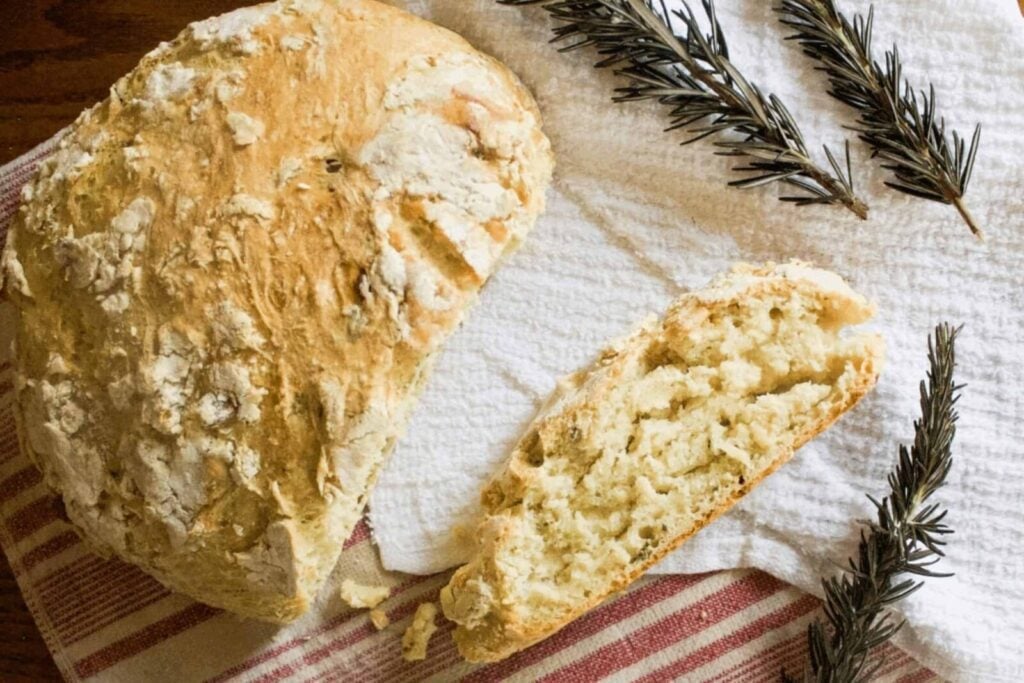
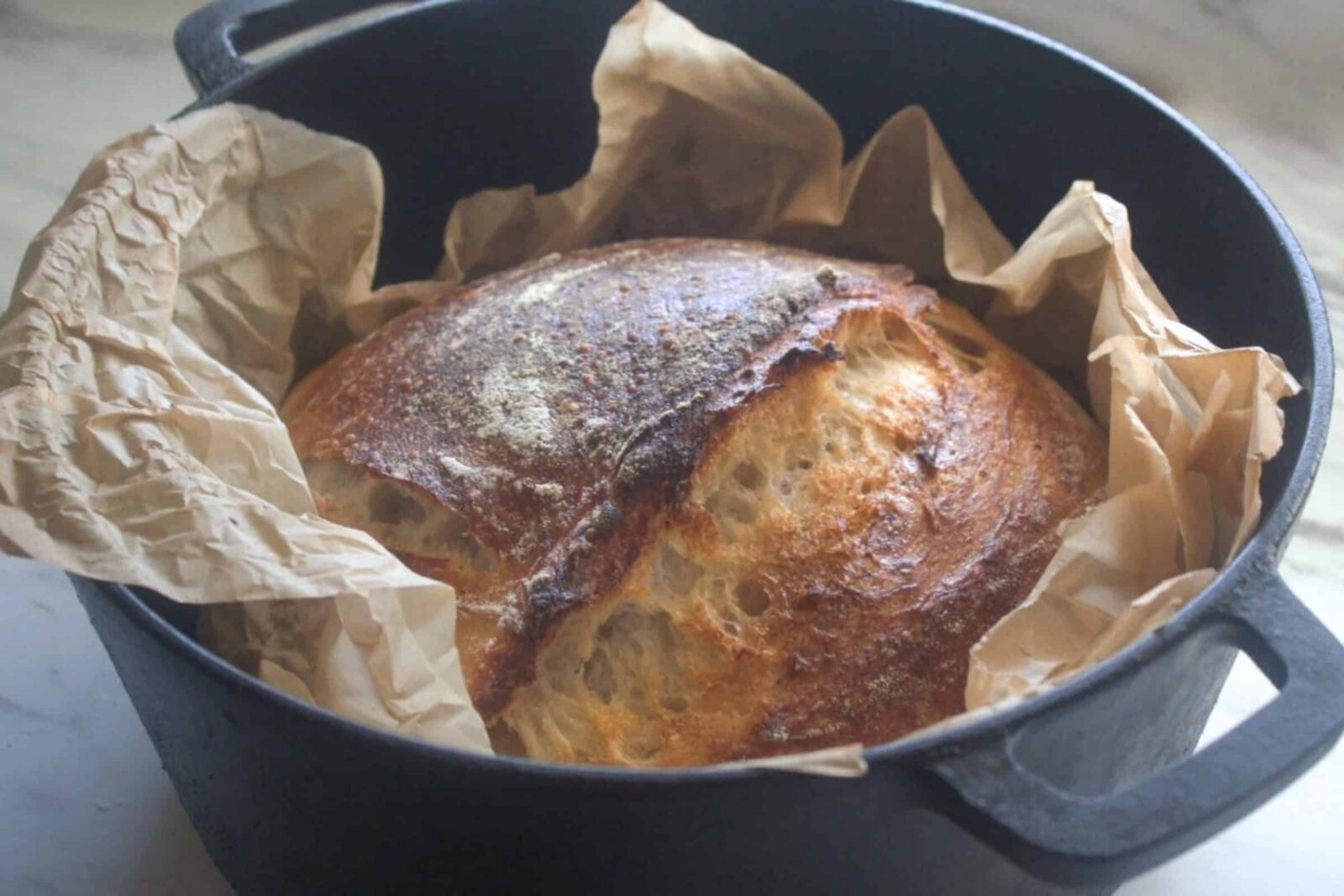
As a busy mom, I often forget to feed my sourdough starter the night before, or I simply don’t have time to wait around for a multi-day fermentation. That’s why I love same day sourdough bread — fresh, tangy, and chewy loaves in just a few hours without the overnight wait. With a strong starter, warm proofing, and a few simple techniques, even beginners can pull off a beautiful loaf in one day.
Disclosure: This post may contain affiliate links. That means I may earn a small commission if you purchase through them, at no additional cost to you.
Step-by-Step Same Day Sourdough Bread Recipe
Ingredients
- 500 g flour (all-purpose works great; bread flour gives a chewier texture)
- 325 g water
- 100 g active sourdough starter
- 10 g salt
Optional: A few tablespoons of whole wheat or rye flour for added flavor and texture.
Flour notes:
All-purpose flour gives a softer, more tender crumb, while bread flour contains more protein, which helps create a chewier structure and a stronger rise. Both work — it’s just a matter of preference.
1. Feed Your Starter Early
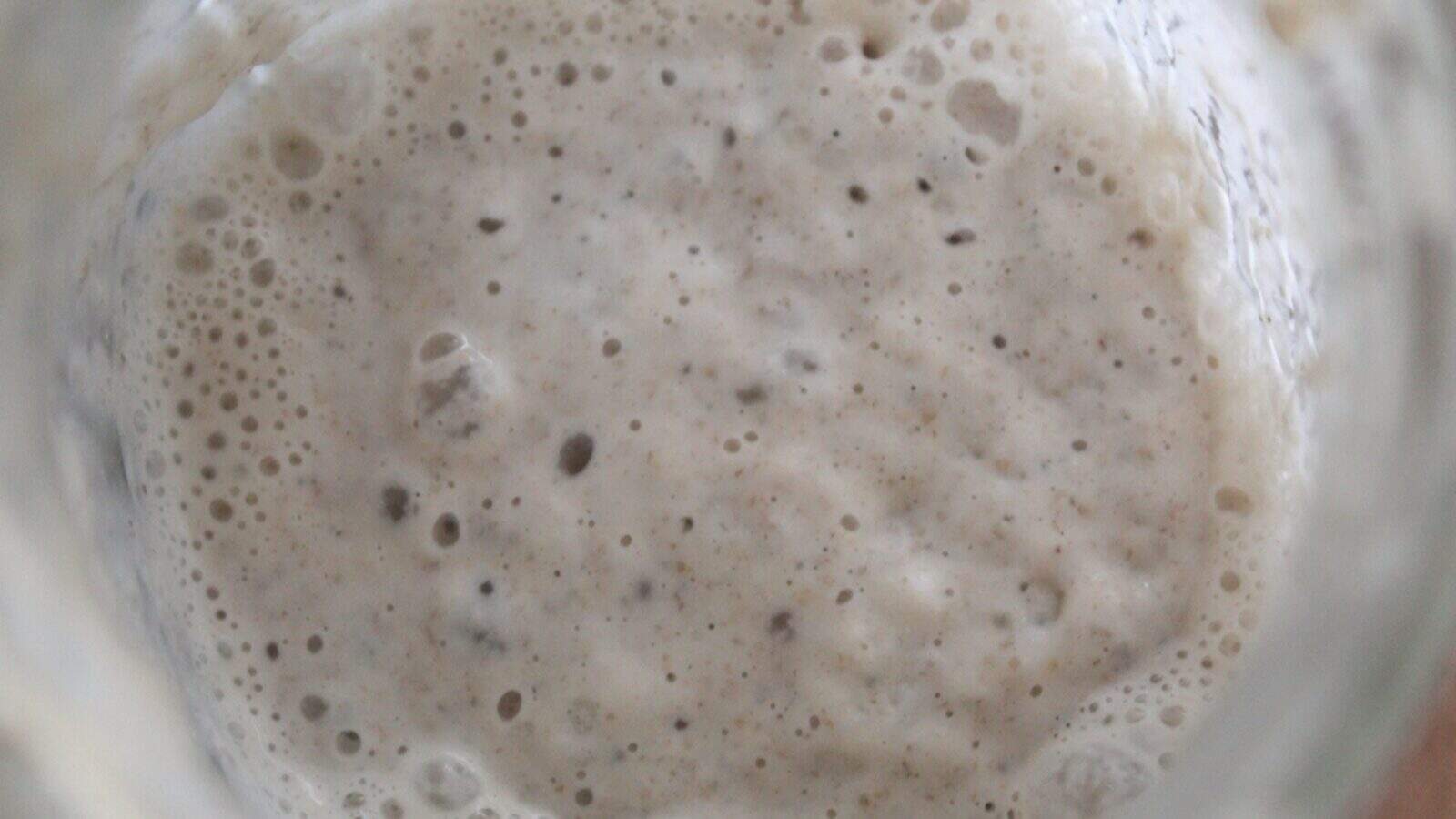
Feed your starter early in the morning. Avoid feeding it the night before and using it immediately, because overnight it may have fallen and won’t be as active. With a strong starter, it usually takes 2–3 hours in a warm spot (like an oven with the light on) to get bubbly and ready.
2. Mix Your Dough
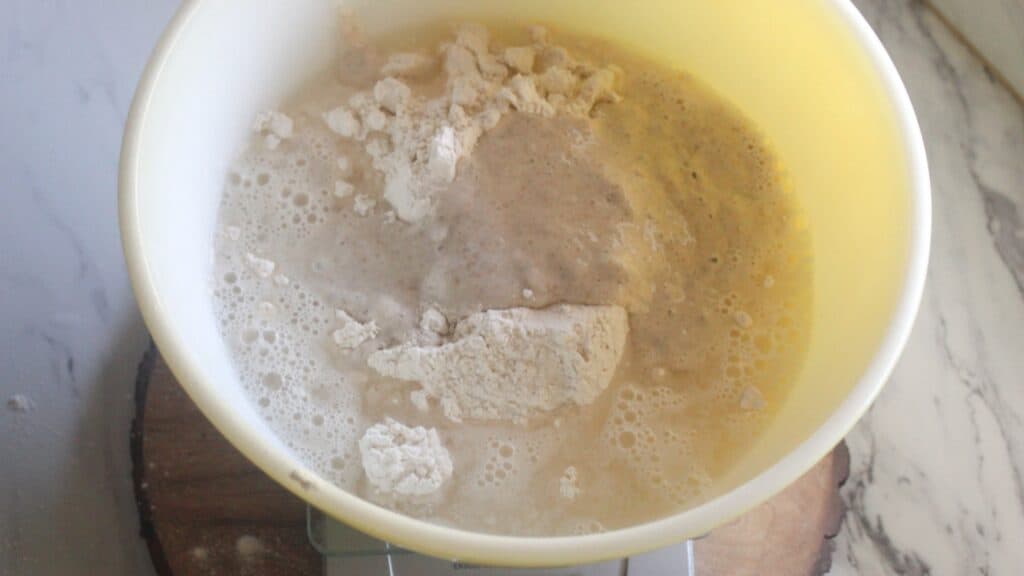
Combine 250g of water and all of the starter and flour first. Mix until no dry flour remains. Let the dough rest for 20–30 minutes — this autolyse helps improve gluten development.
3. Add Salt and Remaining Water
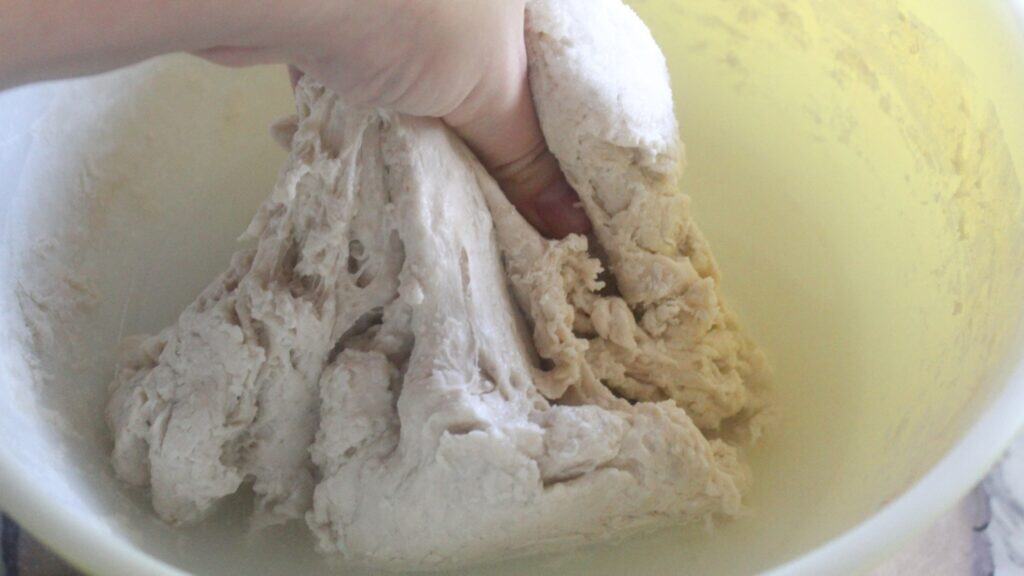
Add the remaining 75g of water and all of your salt to the bowl. Use your hand to squeeze the mixture together until it is all incorporated.
4. Stretch & Fold
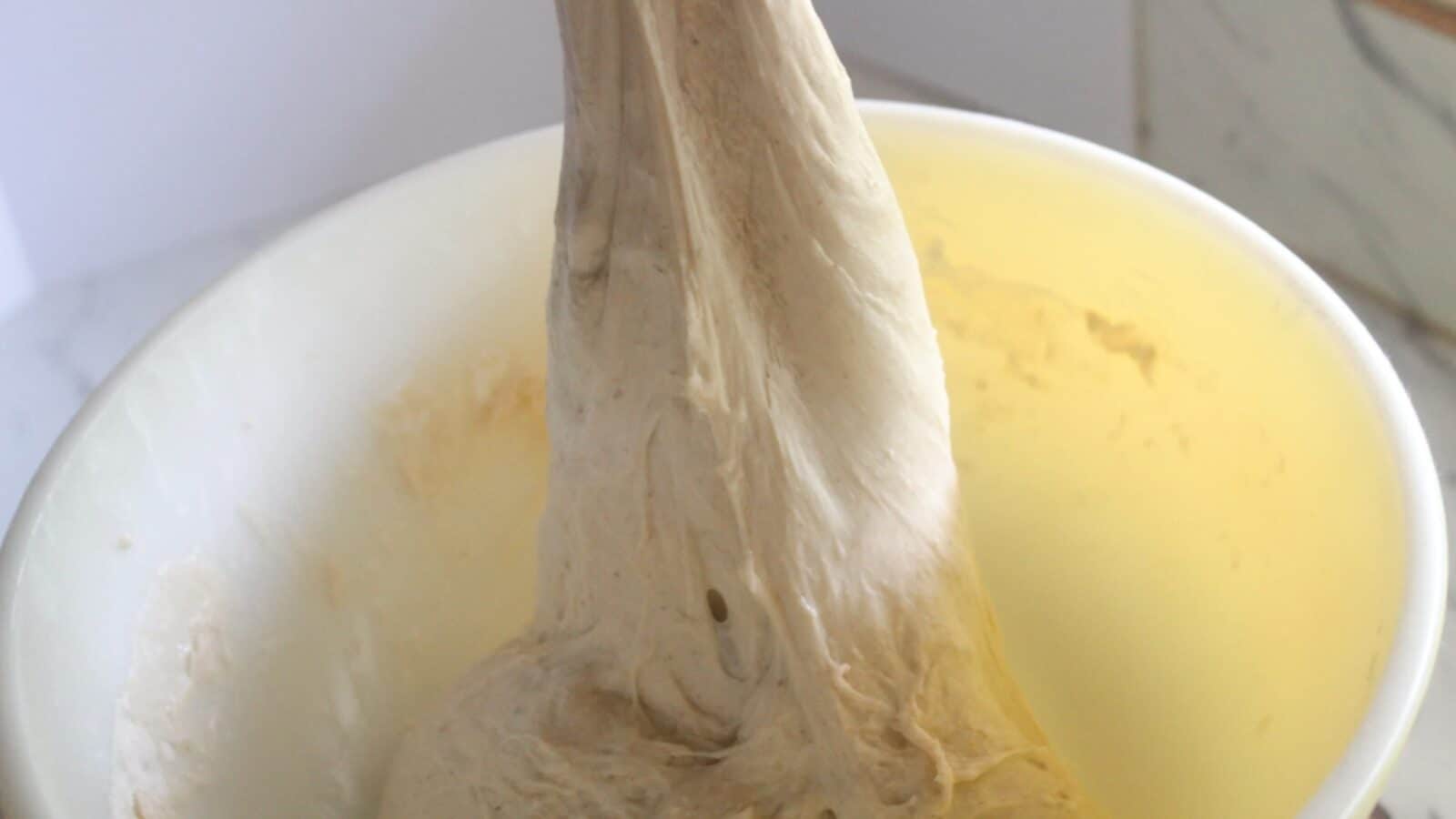
Do 4 stretch-and-folds spaced 15 minutes apart. Wet your hands lightly, lift one side of the dough, stretch it gently, and fold it over the opposite side. Repeat on all sides, then let the dough rest 15 minutes before the next fold. This strengthens the dough and traps air for a lighter, more open loaf.
5. Bulk Fermentation
Let the dough rest for about 5 hours in a warm spot. Using the oven with the light on is a simple trick that provides consistent warmth to speed fermentation.
After bulk fermentation, your dough should be slightly puffy and airy.
6. Shape and Rest
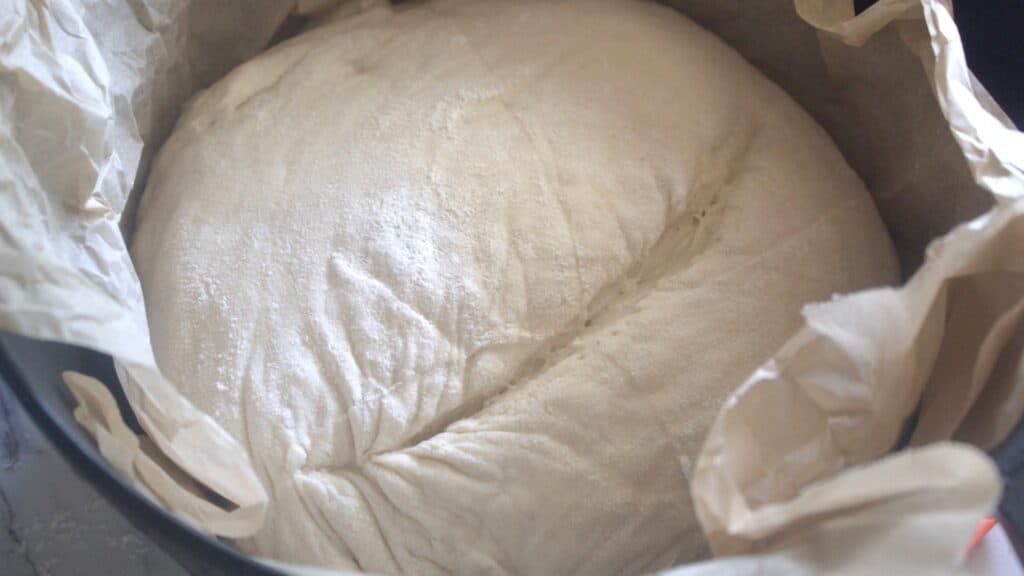
Gently shape your dough into a boule or batard and place it in a banneton basket — no pre-shaping needed. Let it rest in the same warm spot for 1 hour while your oven and Dutch oven preheat.
7. Bake
- Preheat your Dutch oven to 450°F (232°C) for 30 minutes.
- Add a small oven-safe bowl to the bottom rack of your oven and fill it with ice. This helps create steam and enhance the bread.
- Place the dough inside, score the top using a sharp knife or razor, cover, and bake 25 minutes.
- Remove the lid, reduce the temperature to 400°F and bake another 20–25 minutes until golden brown.
Tip: Let the bread cool completely before cutting — this helps the crumb finish setting and improves texture.
Troubleshooting Same Day Sourdough
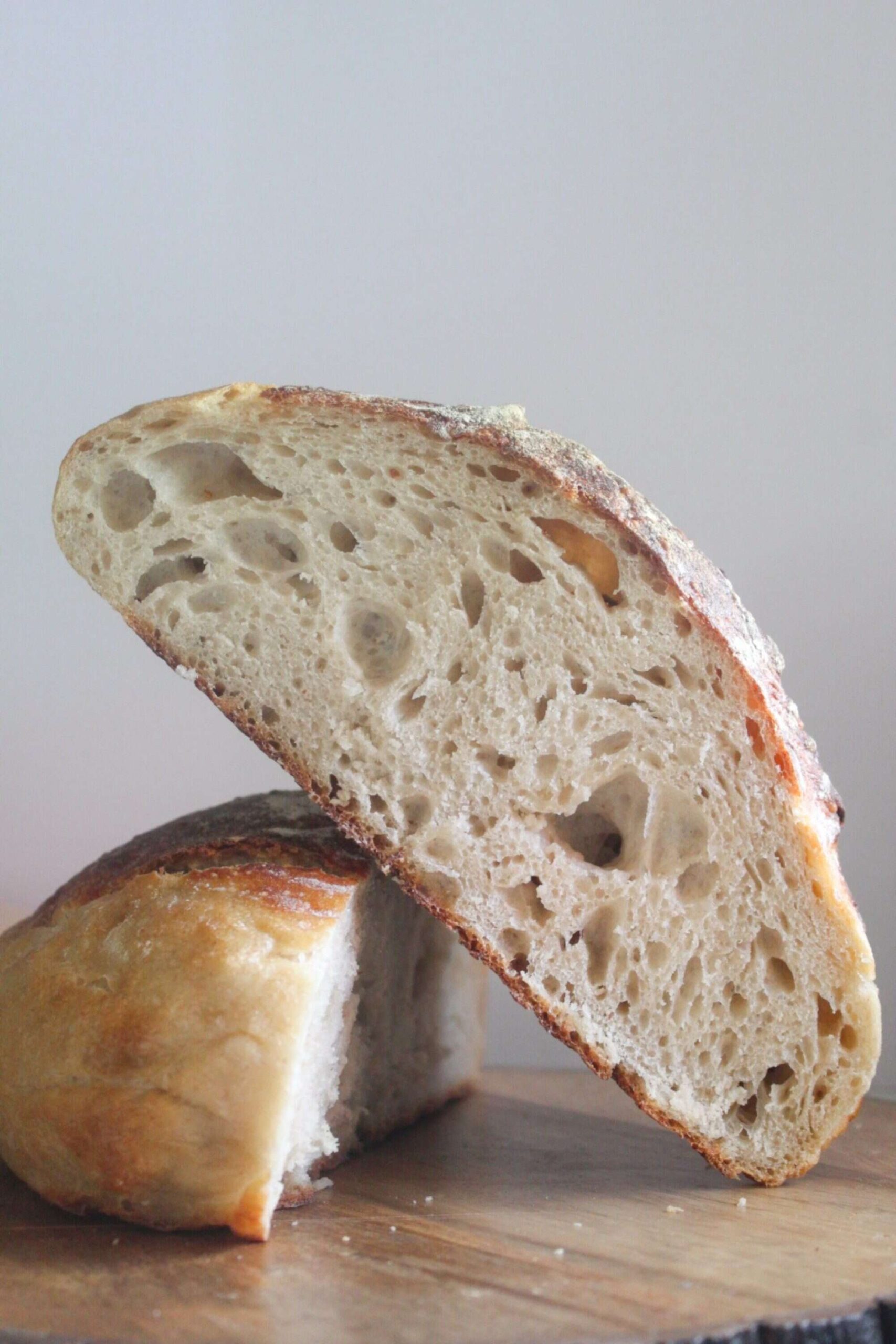
Even with the same-day method, things don’t always go perfectly, and that’s okay! Here’s how to fix common issues:
- Dense or heavy loaf: Usually due to under-fermentation. Make sure your starter is bubbly and active, and give your dough enough time in a warm spot to rise. Stretch-and-folds during bulk fermentation help develop gluten and trap air.
- Sticky dough: High hydration dough can be sticky. Lightly flour your hands and surface, and use gentle stretch-and-fold motions. Avoid over-flouring; a slightly sticky dough helps create an open, airy crumb.
- Pale or hard crust: Oven not hot enough or lack of steam can cause this. Preheat thoroughly, and if you don’t have a Dutch oven, use a tray of water in the oven for steam.
- Dough won’t rise: This is usually an inactive starter. Feed it 4–6 hours before baking and make sure it’s bubbly. Warm proofing helps jumpstart fermentation.
- Mild flavor: Same-day sourdough naturally has a gentler tang than overnight loaves. Extend bulk fermentation slightly or use a more mature starter for more sourness.
Tips & Shortcuts for Making Sourdough Bread In One Day
- Warm oven proofing: Oven with light on creates consistent warmth — my go-to trick.
- Stretch-and-fold: Builds dough strength faster than traditional kneading.
- Active starter: Feed early in the morning for best results.
- Shaping rest: 1-hour rest in the warm spot makes dough easier to handle.
- Cooling completely: Ensures the crumb sets; cutting too early makes it gummy.
Try This Next
Once you’ve mastered same-day sourdough, try it in different ways:
- Make sourdough bread in a bread machine for an easy twist.
- Pair it with my cherry jam recipe for a delicious breakfast or snack.
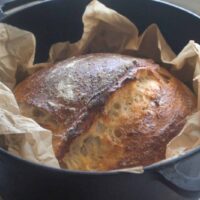
Same Day Sourdough Bread
Ingredients
- 500 g flour all-purpose works great; bread flour gives a chewier texture
- 325 g water
- 100 g active sourdough starter
- 10 g salt
- Optional: A few tablespoons of whole wheat or rye flour for added flavor and texture.
Instructions
- Feed your starter early in the morning. Avoid feeding it the night before and using it immediately, because overnight it may have fallen and won’t be as active. With a strong starter, it usually takes 2–3 hours in a warm spot (like an oven with the light on) to get bubbly and ready.
- Combine 250g of water and all of the starter and flour first. Mix until no dry flour remains. Let the dough rest for 20–30 minutes — this autolyse helps improve gluten development.
- Add the remaining 75g of water and all of your salt to the bowl. Use your hand to squeeze the mixture together until it is all incorporated.
- Do 4 stretch-and-folds spaced 15 minutes apart. Wet your hands lightly, lift one side of the dough, stretch it gently, and fold it over the opposite side. Repeat on all sides, then let the dough rest 15 minutes before the next fold. This strengthens the dough and traps air for a lighter, more open loaf.
- Let the dough rest for about 5 hours in a warm spot. Using the oven with the light on is a simple trick that provides consistent warmth to speed fermentation.
- After bulk fermentation, your dough should be slightly puffy and airy.
- Gently shape your dough into a boule or batard and place it in a banneton basket — no pre-shaping needed. Let it rest in the same warm spot for 1 hour while your oven and Dutch oven preheat.
- Preheat your Dutch oven to 450°F (232°C) for 30 minutes.
- Add a small oven-safe bowl to the bottom rack of your oven and fill it with ice. This helps create steam and enhance the bread.
- Place the dough inside, score the top using a sharp knife or razor, cover, and bake 25 minutes.
- Remove the lid, reduce the temperature to 400°F and bake another 20–25 minutes until golden brown.
Notes
Same-day sourdough is perfect for busy parents, beginners, or anyone craving fresh bread without waiting multiple days. With a strong starter, warm proofing, and a few smart shortcuts, you can enjoy a soft, chewy loaf with a crisp crust — all in just a few hours.
Experiment with flour types, proofing times, and hydration to find your perfect loaf. Every bake teaches you a little more about the art and science of sourdough!

Hi, I’m Ashley — mama, maker, and lover of all things from-scratch. Around here, you’ll usually find me barefoot in the kitchen, covered in flour or beeswax, with kids underfoot and something simmering on the stove. I believe in slow living, simple joys, and the kind of home that smells like cinnamon rolls and sunshine. Find out more about me here.